Management as a Game
About fifteen years ago I noticed that multiplayer computer games are full of good metaphors for what happens to us in real life. That's how a concept called the Hexagrammaton was born.
About fifteen years ago I noticed that multiplayer computer games contain a lot of good metaphors for what happens to us in real life. That’s how a concept called the Hexagrammaton was born. Below you’ll find plenty of funny pictures and terms, but in my view they’re far more accurate than the alternatives.
Unlike a great many quasi-psychological theories, the Hexagrammaton is not about personality traits — it’s about your role in a team.
Within my idea, the same person occupies different positions in different teams, likes different things, and generally behaves differently. This is not socionics and not scientific knowledge. Rather, it’s a generalization of my direct observations.
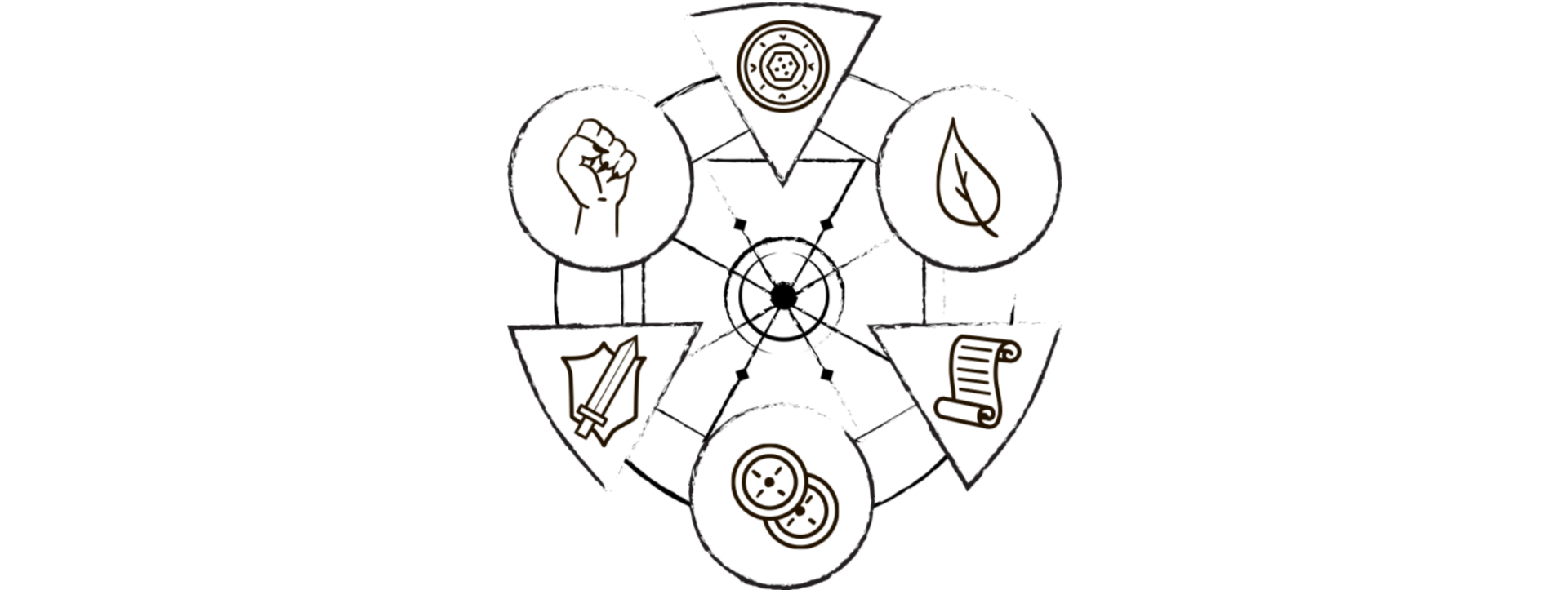
The Hexagrammaton has six positions — ethical (races) and functional (roles)
Each position has its own motivation — mana. It’s a certain form of social energy. When a person receives it, they want to work more. If in the course of the work they receive more of this energy, they keep investing effort. If their energy only gets spent and never replenished, then they “somehow don’t really feel like working.”
I believe that every sensible person, moving through the one and only life they get, is interested in feeling awesome more often and feeling sick less often. For that you need to know what makes you feel awesome and what makes you feel sick. Then you arrange the right conditions for yourself. So mana is the thing that makes you feel awesome.
Each position is also understood through what a person considers the most terrible mortal sin and which value they are not willing to part with.
Ethical positions
Dwarves
Dwarves are about money. Dwarves have a very simple kind of mana. All of a Dwarf’s joy is contained in little yellow metal discs. More gold — more joy.
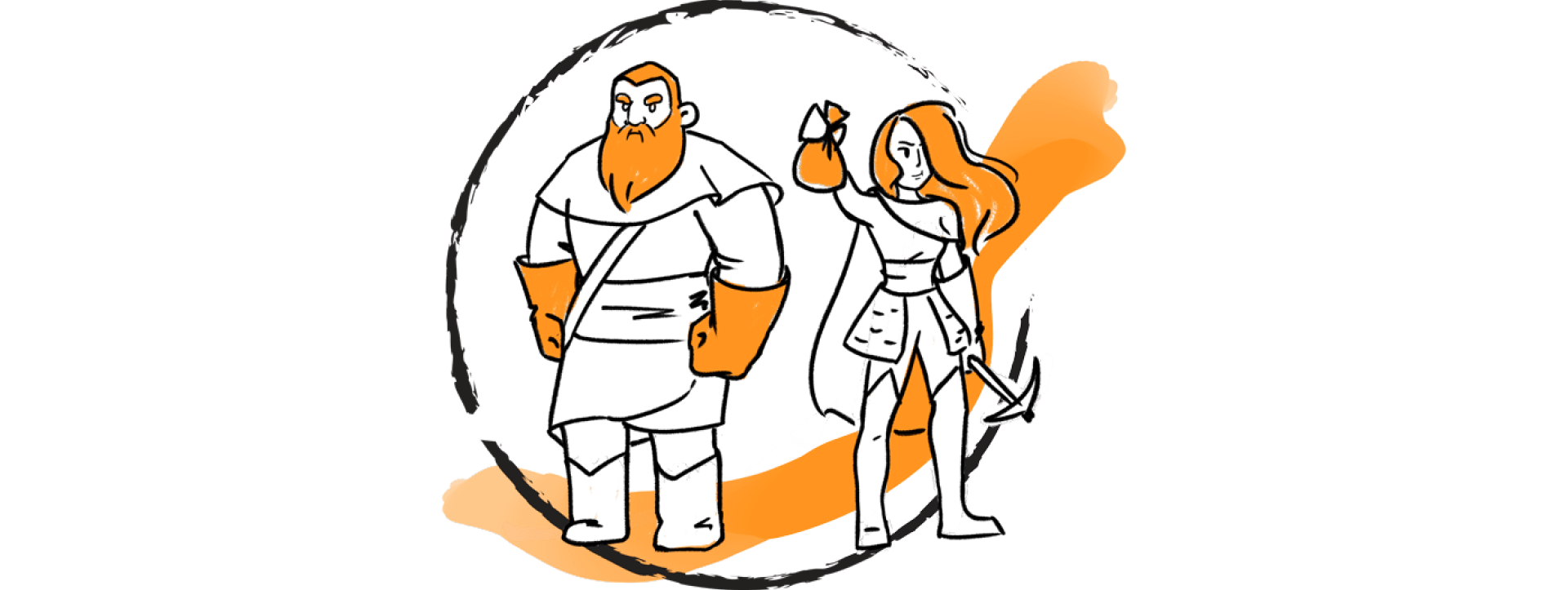
Dwarves value control and look at everything as a resource.
For example, there’s a resource called “human relationships,” or “charisma,” or “discovery.” You can talk about all these things in resource logic, because it’s universal. So from the Dwarves’ point of view, people are a resource too. They’re the building blocks from which they assemble the business machine.
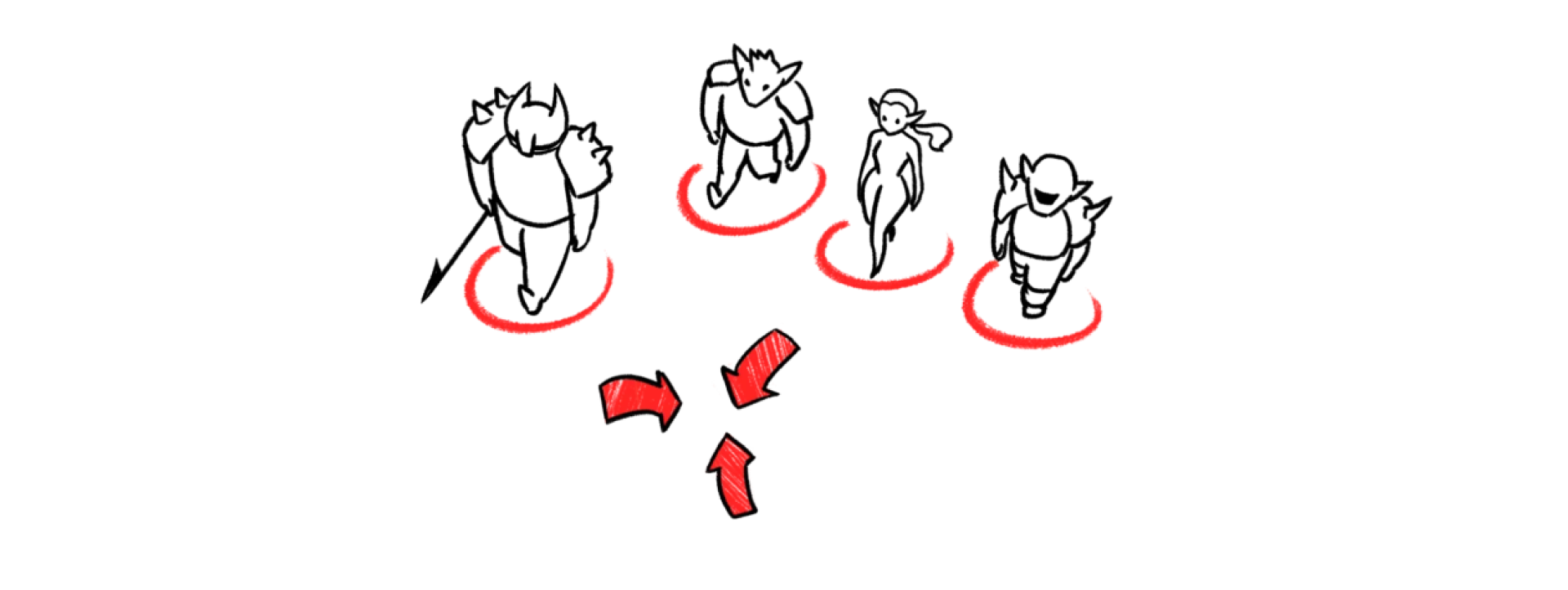
Dwarves are about maximum profit, maximum market control. Every Dwarf strives to own as much of everything as possible. Accordingly, the Dwarf’s way of operating is simple: he controls those below him in the hierarchy of subordination. Dwarves love to work, and they love other people for working. For the Dwarves, of course.
How they make decisions
Whoever owns the resources makes the decisions about them. When Dwarves build structures, they go: “Right. Either I’m your resource, or you’re my resource.” Roughly like that. How do you figure out who does what? If Seryoga is Natasha’s resource, then Natasha decides. The one who owns the resource single-handedly decides its further fate.
Management style
Dwarves use tyranny. Why would you ask a resource anything? If it belongs to the Dwarf, the Dwarf spends it however he sees fit.
Dwarves are not willing to part with resources. A pure, hundred-percent Dwarf will say: “Wait, you want me to spend resources now, and then maybe they’ll come back to me later? Are you complete idiots?! I’m not handing over any resources.”
In this sense a pure Dwarf who has no inventor’s circuit doesn’t know how to invest at all. He can only do the short metric, only cash flow, only fast turnover. “I spend money so that it reliably comes back. If the money didn’t come back to me in reliable, simple forms, that’s not for me.” How do you corner a Dwarf? Make him understand that if he doesn’t do something, he’ll lose a resource.
The main sins for a Dwarf — the things he hates other people for — are theft and squandering. A particular case of the same sin is promising and not delivering. Theft is clear enough: one Dwarf took a resource away from another Dwarf. That’s bad, but understandable. Such things happen in the world of Dwarves. But if you were given a resource and you simply blew it — that’s an assault on what’s sacred.
Elves
These folks are nothing like Dwarves. They’re about love. On the whole, if you don’t have Elves, you most likely don’t have a team either. You may have a business machine or a research group, but there are no relationships, no stability, no social glue, and you don’t feel like coming to work for the sake of colleagues like that at all. You don’t love anyone, no one loves you, everyone wishes everyone else were six feet under. Roughly like that.
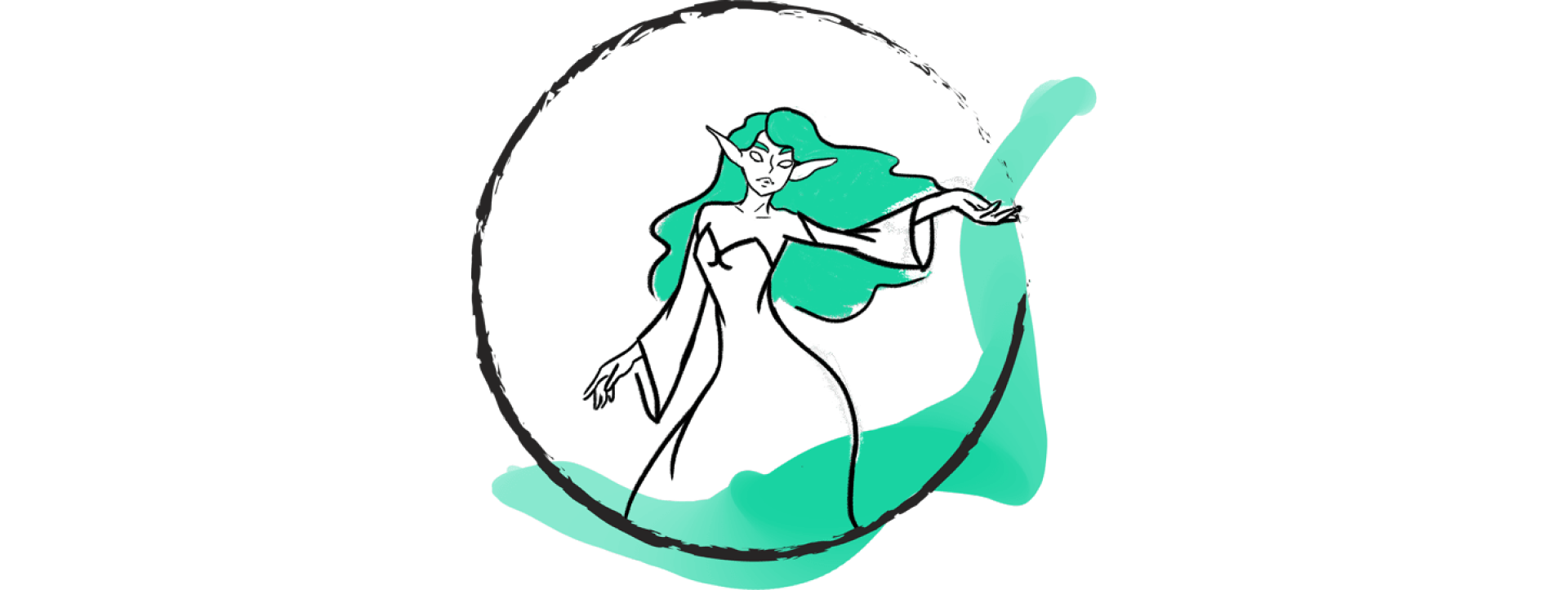
Elves come to work because the team there is great.
“A great team” — ever heard that phrase in a job interview? It’s an Elvish one. What matters to them is what kind of relationships form in the course of work, how you’re treated, whether you’re valued as a person.
What does an Elf do at work? Makes sure nobody gets hurt. That everyone loves each other, no one steps on anyone’s sore toe, no one spits into anyone’s soul. Elves do diplomacy, sharing, soul-searching — digging through their own soul and their neighbors’.
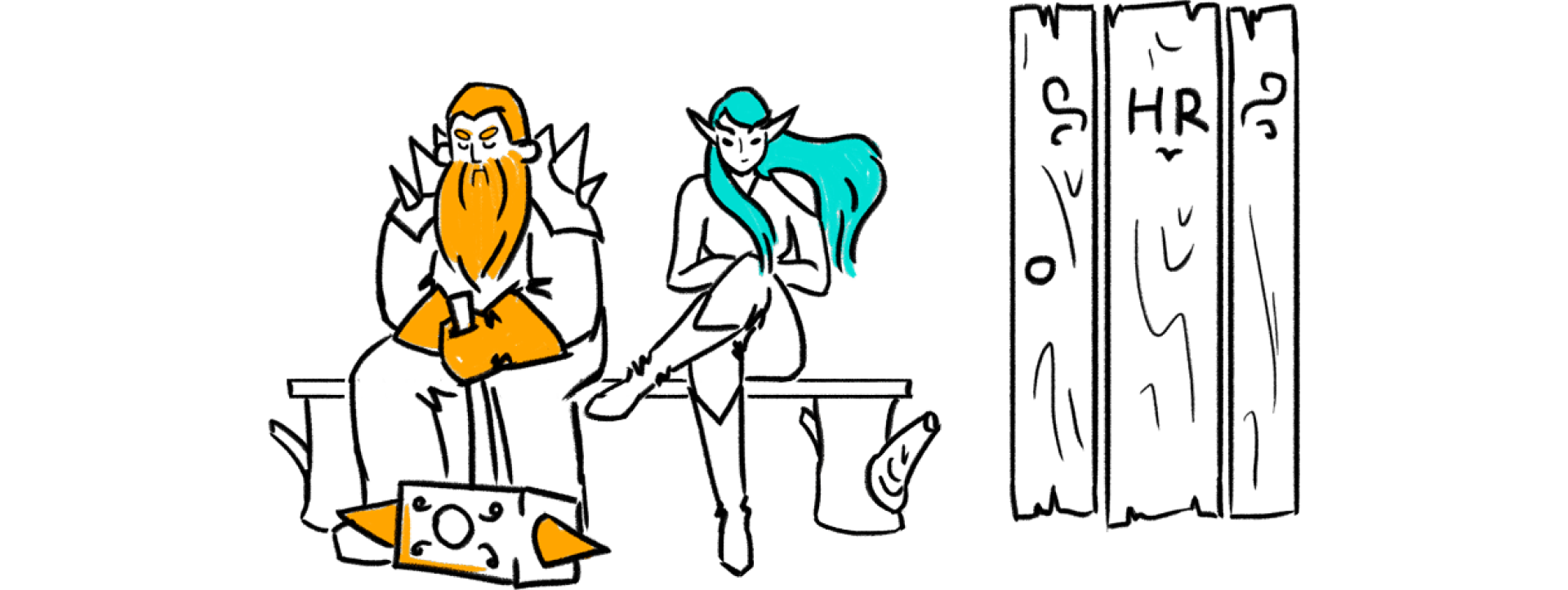
If an HR person is not an Elf, they’re most likely unfit for the job. Usually an HR person is not only an Elf but something else as well — but an Elf necessarily. For example, there are Elf-Dwarves.
How they make decisions
Elves have the most revolting decision-making method of all. Even worse than democracy. It’s consensus. “We won’t do anything until absolutely everyone agrees.” It’s the slowest, most inarticulate something. You can pound water in a mortar for as long as you like, and one hysterical person renders the entire Elvish team completely inoperative. Nobody does anything, because somebody disagrees.
Management style
The style an Elf leader uses is negotiation. People should work voluntarily.
Actually, this is a very good emotion. And the story I’m telling you right now is in many ways an Elvish one. The ideology of the Hexagrammaton is that a person works because work brings them joy. That’s how I build JetStyle. I think it’s awesome for me to work with people who enjoy working, because then I feel awesome too. Which means that, on the whole, I’m an Elf.
A pure Elf is entirely incapable of giving orders, because an order hurts. An Elf negotiates.
Meanwhile, the Elves’ main sin is not playing for the team. First of all, Elves are terribly jealous creatures. If you, God forbid, love not only our team, one day you simply won’t wake up. Betrayal comes first. But an even more terrible sin is desertion. “And where do you think you’re going, walking out of our sect? What is this? You’re a traitor.” “Looks like Masha is cheating on us with the neighboring team. She’s about to regret it.”
Trolls
The first ethic — the Dwarven one — is a resource ethic: the good guy is the one who accumulates resources.
The second — the Elvish one — is the ethic of love and justice. We’re all human, and we should make things good for all of us. The core values are the team and the individual person, love and justice.
So what is the third ethic about? Truth. What the facts really are, how the world is actually built. That’s what lies at the foundation of the Troll ethic.

Trolls stand for revelations, sudden discoveries, and the naked truth.
And if in the process everyone is crying, everyone’s been smeared to hell, the Elves are sobbing and thrashing in hysterics, the Troll thinks to himself: “Oh, how awesomely I’ve cracked open the truth.”
Let me show it with a Dwarf as the example. “I’ve got money, and I got it because a certain someone doesn’t quite understand what exactly he gave it to me for.” Then a Troll comes along and says: “How about we honestly tell him how things really stand.” He won’t live long. Who needs that kind of truth?
Dwarves are for the truth, but not just any truth, and only when it brings resources. Trolls, on the other hand, simply love showing that the world is actually not what you think it is — it’s different. In that sense, they have no goal of hurting the person next to them. They just don’t give a damn about pain — they do give a damn about facts. They love critical thinking, formal logic, and digging all the way down to the truth.
The Trolls’ goal is revolution, a radical renewal of the situation, because however things stand, there is always a divergence between the map of reality and reality itself. And there’s always this moment when people, out of their own inertia, get used to a particular map of reality and don’t want the map to change.
By the way, no inventions get made without Trolls, because to invent you have to lay bare the nature of things. Climb inside and understand what the real problem is. Pull the skeletons out of the closets and dump them onto the table. Elves and Mages love creativity too, but they won’t crawl into places where it’s going to hurt. And inventions inside an organization are almost always painful.
How they make decisions
Trolls use proof.
Management style
The most terrifying one. Even worse than the Elves’. It’s no-holds-barred fighting with facts.
What can’t a Troll do? He can’t stay silent. If there is some truth that it’s unprofitable to speak, the Troll will say it anyway. Because the truth must be spoken.
Conflicts between the ethics
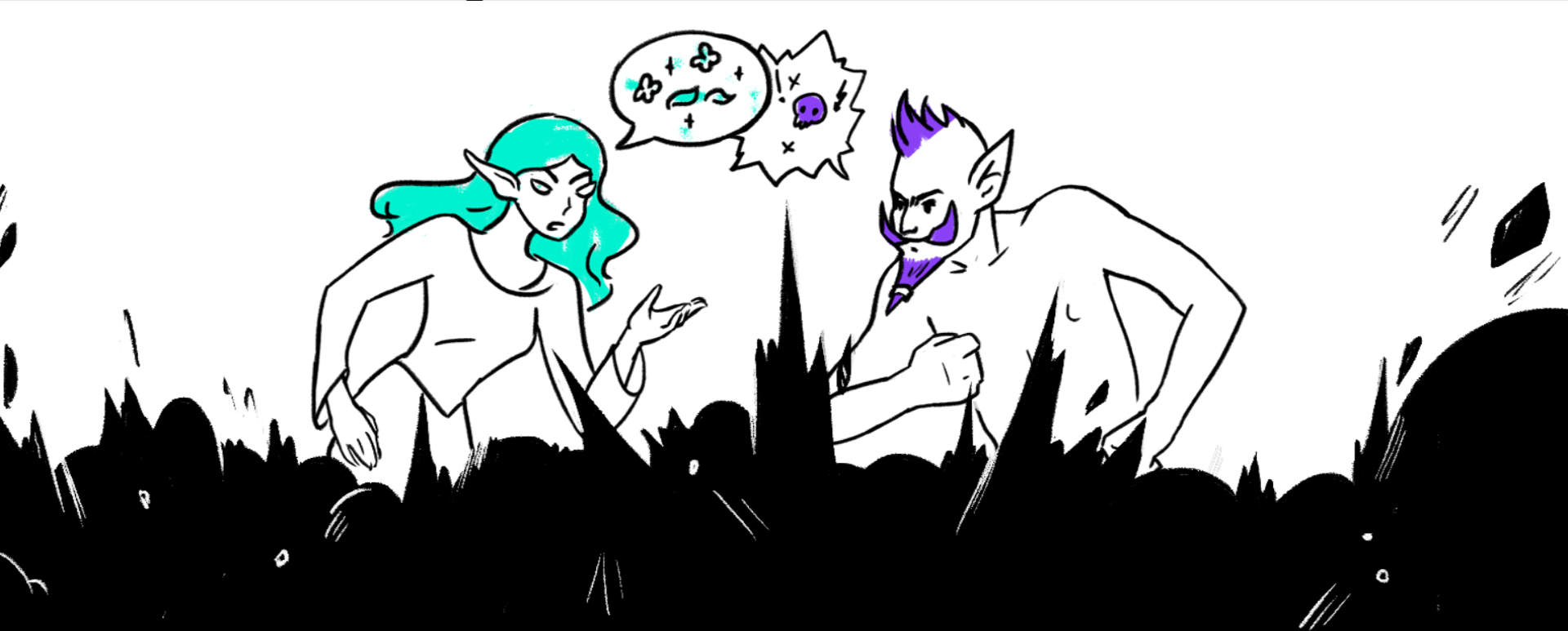
What does a conflict between Dwarves and Elves look like?
Elves:
“Listen, we’re people, we’re not machines. We’re one big family. And you make us burn our resource and die at work. It’s inhumane.”
Dwarves:
“No, hold on. We’re here making money, this is a business, and a business is a machine. Yes, of course, we use human resources for that. Which, by the way, is exactly what you are — our resource.”
An example of a conflict between Dwarves and Trolls
Dwarves:
“The truth should be spoken only if that truth results in more resource.”
Trolls:
“No, the truth should be spoken in any case, because that’s how the world is built.”
A conflict between Trolls and Elves looks roughly like this
Trolls:
“So there’s Seryozha. He’s an asshole.”
Elves:
“Yes, Seryozha’s an asshole — but he’s ours!”
Trolls:
“Seryozha is ours, sure, but he’s an asshole.”
One ethic missing — problems guaranteed
If a team lacks one of these three ethics — that is, if the team has no advocates of resource logic, no advocates of individual people and human relationships, or no advocates of truth — then the team has problems.
If there are no Dwarves, there’s no business
Resources simply get squandered, the Trolls and Elves play their magical games, nobody makes any money. We’re just here hanging out.
If there are no Elves, there’s no team
It’s unclear why you’d live your life out here — it’s just very painful. We get no energy at all from the work.
If there are no Trolls, we start lying to ourselves
We fairly quickly close in on ourselves or end up in the logic of a sect. Teams that lack the ethic of truth figure out fairly quickly that they’re the very best, that everything they have is absolutely awesome, and if anyone thinks otherwise, that person simply needs to be crucified.
Functional positions
Mages
Mages are the folks who are the opposite of Dwarves in how they handle resources. Mages are for innovation. So here’s what a typical conflict between Mages and Dwarves looks like.

Mages:
“What an excellent experiment we’ve run! We burned through a huge pile of resources, and our hypothesis has been refuted. (Engineers know that a refuted hypothesis is a good result for an experiment.) Look what we’ve learned! Holy crap, what a great discovery!”
And the Dwarf goes:
“Hold on. And for this great discovery I paid 7 million rubles? What the hell is this? I actually wanted to make money.”
And the Mages tell him:
“Well, you wanted to build a technology company, didn’t you? And how exactly are you going to make an invention in a zone where everything is known for certain? We need to make a mistake as fast as possible.”
Mages are about being the very first to do something.
Mages are about priority. They don’t care whether the thing is useful or not. What matters to them is doing something first, so that all the other Mages in the area go: “Oooooh, nice work guys, respect.”
How they make decisions
Testing their own ideas and rolling out experiments.
Management style
Constant experimentation. The methodology of HADI cycles is pure Mage stuff. We must burn through resource in order to learn new things.
The Mage’s problem is that he will work on whichever solution is more interesting, more innovative, and generally “nobody has done it this way before, I’m the first to come up with this thing.” A Mage doesn’t know how to put a full stop. Mages are usually perfectionists; they will keep going and going, because while running one experiment they find a reason for ten more: “I’m about to learn even more!”
So on the whole, it’s an excellent combination when you have a Dwarf-Mage. He balances himself: “I will run the experiment, but its goal is to extract profit.” Exactly this combination of ethic and functional role is the foundation of a technology-company leader at the early stage.
Priests
Priests tell the company who we are, what we exist for, what kind of people we need — and what kind we must never take under any circumstances.
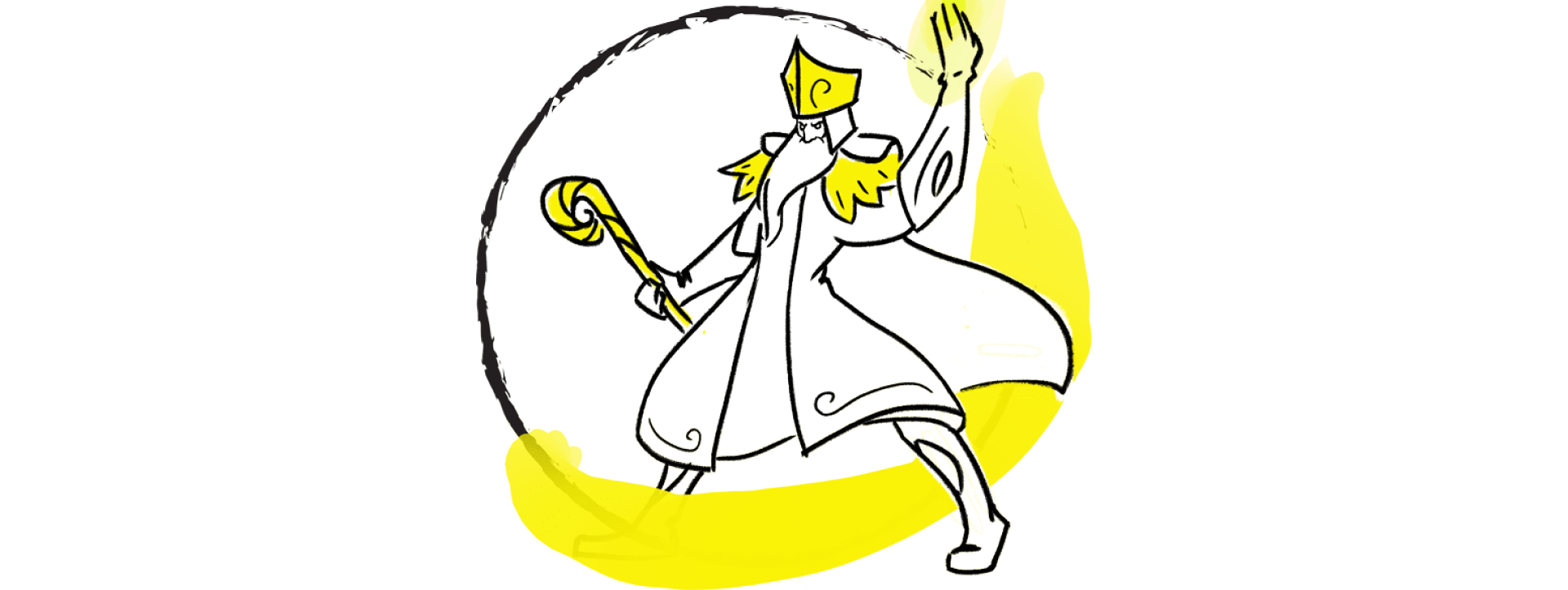
The Priests’ main word is mission.
The word “evangelist” was invented by Priests. When a Priest justifies some revelation, he uses the words right and wrong, because that concept exists in the code of the organization itself. “Our organization is like this.”
For example, the phrase from Rideró: “We are always on the author’s side” — that’s a Priestly phrase. As a Priest inside Rideró, I say: “This is who we are, we have certain values, and we are going to live those values out. If someone doesn’t share these values — the bonfire is over there.”
What I’m doing with you right now is very much a Priestly exercise. I’m preaching here. I could even add a bit of emotional pressure, though there’s enough of it as it is — but Priests are usually charismatics and fanatics of their value. In this case, I’m evangelizing the value of mana to you.
How they make decisions
Argument by appeal to shared values. Priests argue atrociously. If, God forbid, you attack a Priest’s value and commit sacrilege, you’re going to get it from him. And there are also things you simply cannot talk to them about. “Someone is wrong on the internet!” — that’s about them.
Management style
Spiritual leader. People follow a Priest because they believe in the truth he proclaims.
A Priest is completely unprepared for criticism of his values.
His sins are simple — heresy. He’s not willing to work in the same company as heretics, which is why his self-balancing position is the Troll. If such a person deeply values truth and constantly balances between his faith and the facts, he doesn’t drive himself into extremes. You can explain things to him; his faith is based on a generalization of some part of reality. This is what I try to practice myself.
Warriors
These folks are responsible for pushing out the outer perimeter. They’re the ones who aren’t scared of doing the “Hello, this is Kirby vacuum cleaners” routine, because the fact that somebody might get hurt in the process doesn’t bother Warriors much.
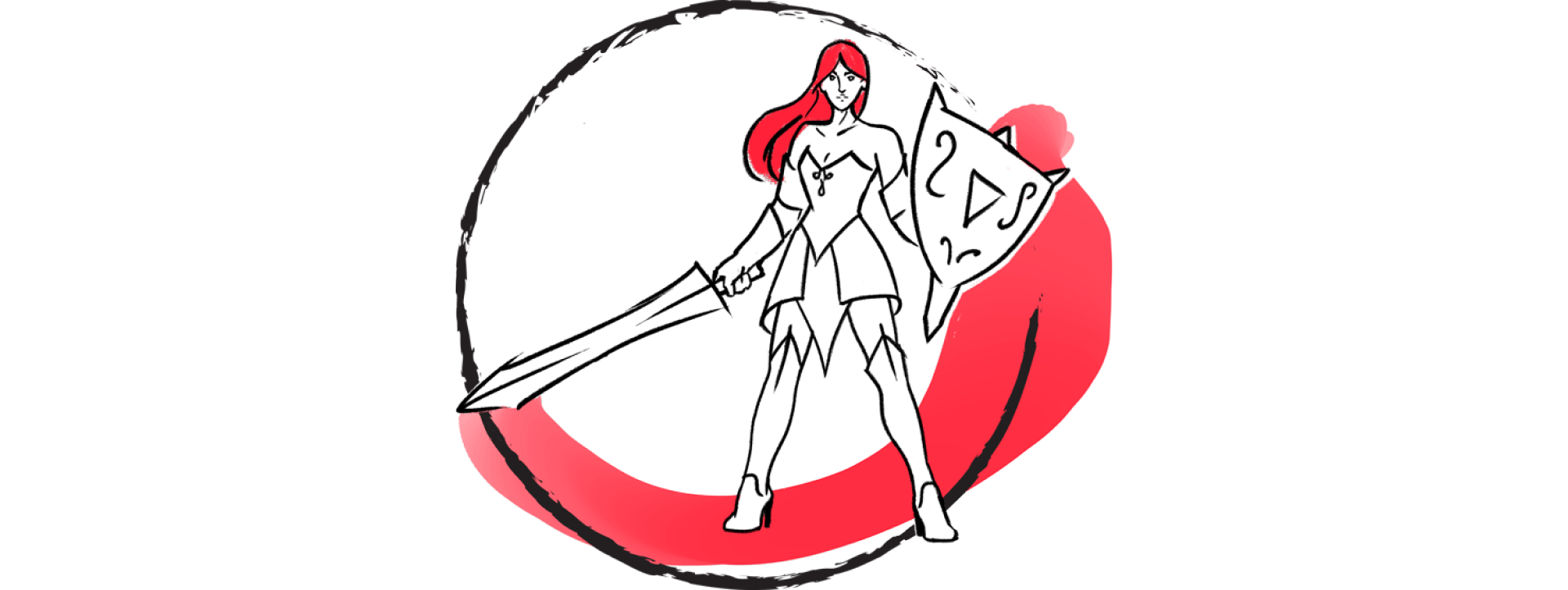
A Warrior is ready to endure the pain of pushing through social contact — their own pain and other people’s. And they’re usually not the guys.
The typical Warrior is a woman commercial director — honed to a razor edge; you could drop her on the enemy from a helicopter and there’d be no survivors. An excellent team member.
The Warrior’s main word is victory. The difference from a Dwarf is that what matters to a Warrior is simply racking up frags (that’s from gamer slang and means “how many enemies I’ve taken down”). A Warrior talks like this: “I dragged in three kick-ass deals today. Honestly, I don’t much care what the margin will be, whether the Mages find it interesting, or whether it’ll bring us profit. THREE DEALS. I’m the man.”
A Warrior’s goals are formulated in terms of conquest: we will capture market share, we will conquer the whole world, and when we come to power, we will be the best.
The Warrior’s categories are mine and ours. “This is our niche, we will be the leaders in it, and here’s what we’ll do to get there.” Whether we make money on it or not is a different story — let the Dwarves think about that. We’re simply going to be ze best. War is war.
So, we have a company of rank-and-file salespeople. They receive an order from their centurion — and off they go. They’re taught to call, to knock on doors, to endure pain, to rejoice in victories. It’s a purely instrumental thing, which is why any active-sales cohort is built exactly this way.
Warriors love victories, know how to live through pain, and know how to capture what belongs to others. They are fairly tough negotiators, and in negotiations what interests them is roughly the following: they need to win, they must be able to chalk up a victory for themselves, otherwise it’s a failure. And they’re here in order to win.
How they make decisions
A direct order.
Management style
The army. Strict discipline: all subordinates have regulations, everything is done by the book.
Diagnostics: who are we?
How do you figure out who occupies which position right now? Look at how a person strives to act and what they’re not willing to give up.

Example 1
A typical story: young entrepreneurs have set out to build a startup. Say, engineers who just graduated from Bauman University. Here’s what happens:
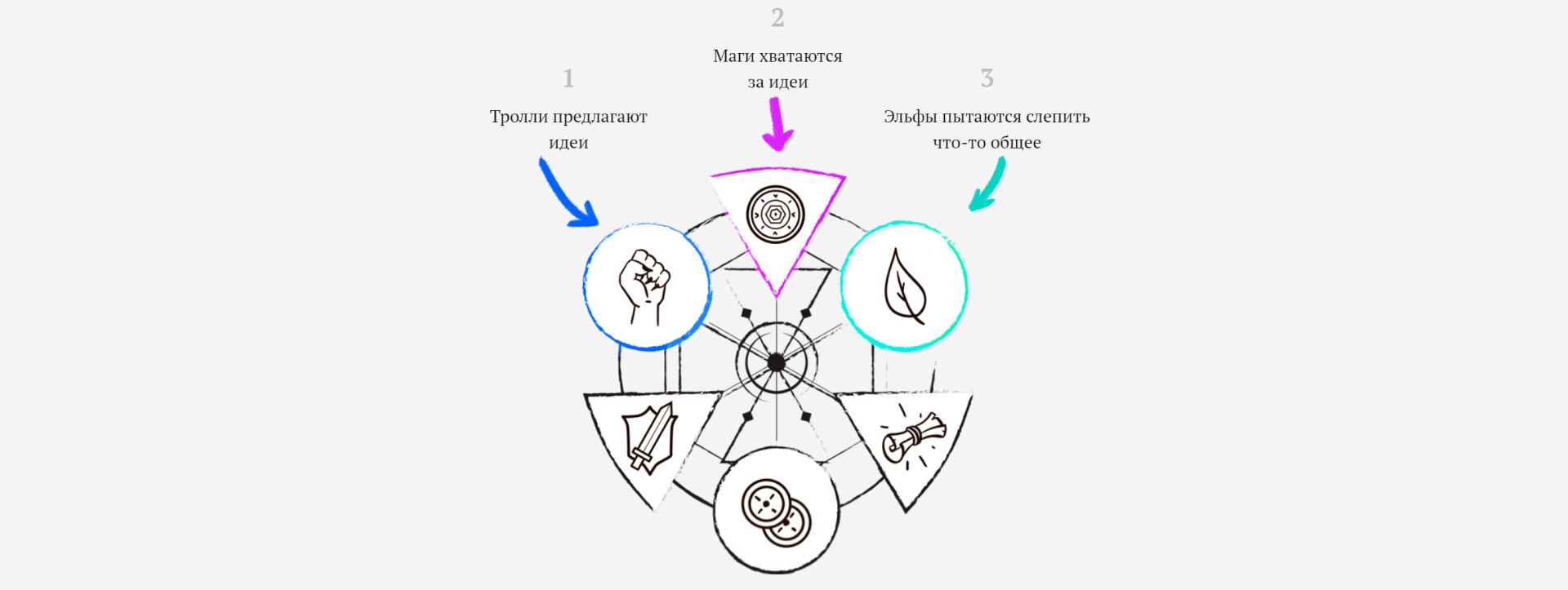
There are guys with ideas. “We’re all one excellent gang.” No money. All of this is terribly interesting. We’re having a great time hanging out in the dorm…
What’s the leader’s position in this spot? An obvious one. The leader must balance the group with himself and give it what the group lacks: “Okay, everything’s awesome, but let’s please do all of this in Dwarven logic.”
Example 2
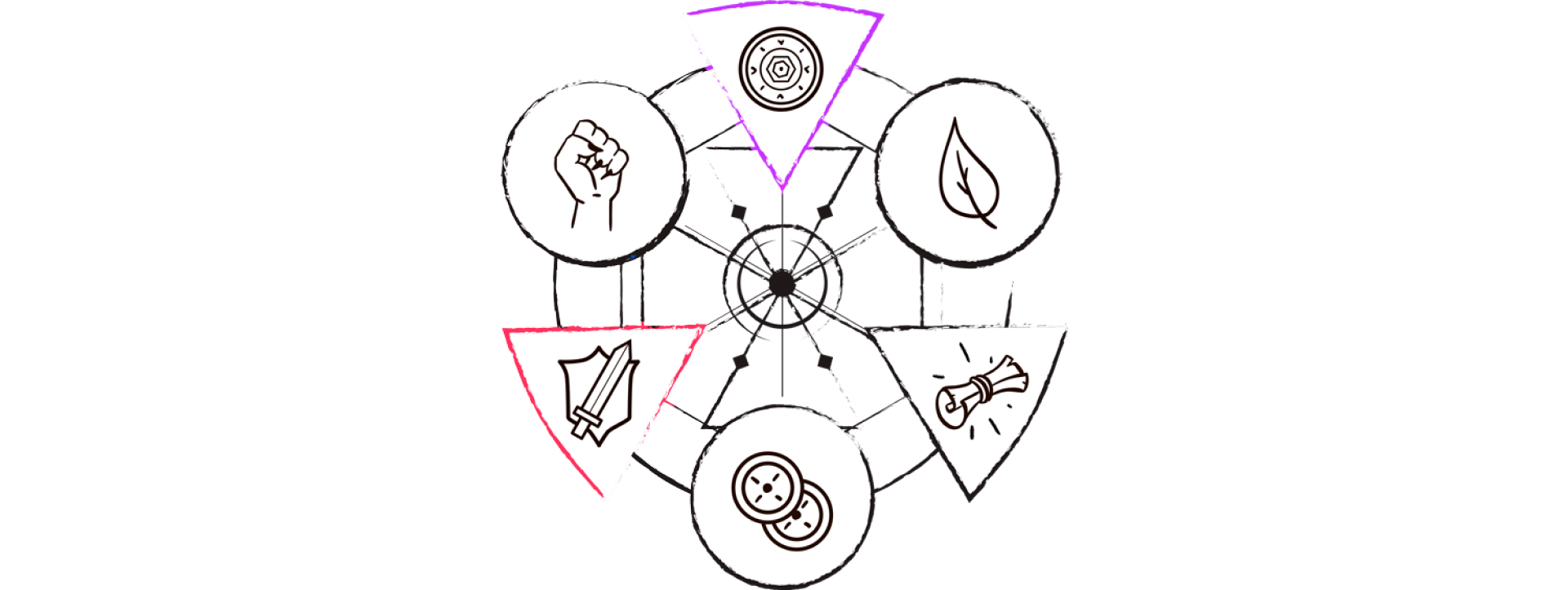
This happens a lot in big companies:
- The Mages don’t understand why our product isn’t selling
- The Warriors complain that whatever the Mages make shows up at the wrong time and nobody needs it
Mages:
“We’ve made a kick-ass product, it’s just that our salespeople are morons.”
Warriors:
“Good lord, the stuff they make is, first, full of bugs; second, late; and third, what made them think anyone even needs this thing?”
This happens when the Mages are in charge. For example, in product companies, where first the Mages build something and then it gets sold.
If you flip the situation around, it looks like this:
- The Mages cry that they’re not allowed to do anything interesting
- The Warriors don’t understand why the Mages won’t march in formation
It’s the same conflict, but when the company runs a sales-driven business.
Mages:
“God, the crap we have to work on — it’s just not interesting at all. Nobody’s been writing on this stack for ages. It’s this mundane whatever that absolutely everyone makes. What we should be building right now is something completely different.”
Warriors:
“And what are they showing off for? It’s their job. They were told this is the product that will sell, so let them go and build that product.”
- The Mages cry that they’re not allowed to do anything interesting
- The Warriors don’t understand why the Mages won’t march in formation
- You’ve probably already guessed that this problem should be solved by a Priest.
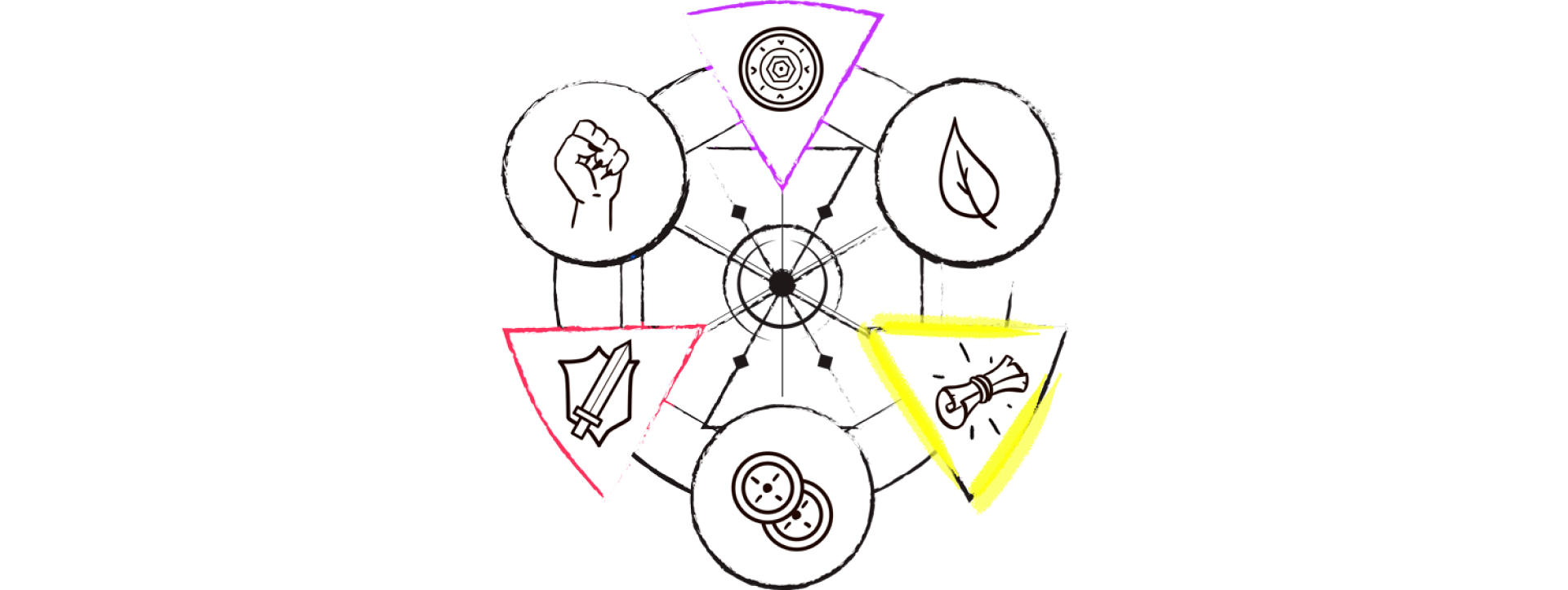
Both sides need to be told: “Look, here is our mission. Here is what we are doing together. Here is the value we are realizing together. Here is how our conflict gets resolved. Here is why you need each other. Here is who we are.”
How does a company develop?
The cycle usually goes like this. The Mage-Trolls suddenly discover something new: “Awesome, we’ve made an invention, we’ve cracked open a truth. Maybe we found something inside the company — until now our big corporation wasn’t ready to open its eyes to a certain inefficiency, and we’ve sorted that situation out.”
After that the Warriors immediately go off to trade on it: “Ooh, this is an innovation. I’m going to sell it to somebody right now.” If something works out, the Dwarves start accumulating resources. And this is the transition from custom development and first sales — to product logic. From the logic of “we built a feature” — to the logic of “we’ll build a stream.” An innovation has been found, the leading value of the invention has shown itself, and the first victories let you accumulate resources.
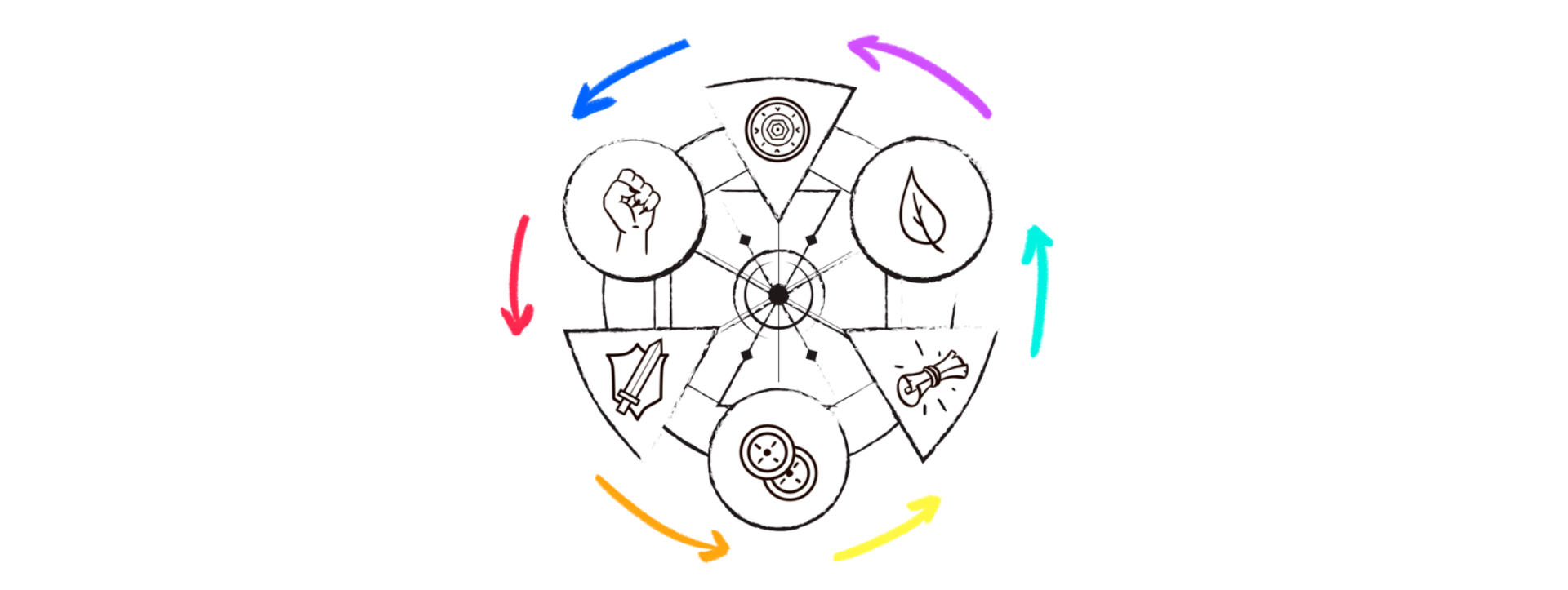
Business acceleration boils down to teaching you to run this cycle in months instead of years. After that, if you’ve done everything right, you grow very fast, and from a small tight-knit team you turn into such a whopper that a conflict emerges between your Mages and your Dwarves.
And here you once again face the question: who are you, and why are you doing all this? You’re no longer a small raid party that can hold together on personal feelings. You need to understand what your mission is, what you do, what you don’t do, what gives you energy. And at this moment the leader becomes a Priest.
If everything goes well, if resource keeps accumulating, you land in the “one big family” situation. All is well. You’ve created the place where elephants come to die.
Then you need to go around the circle once more, but by this moment there’s one little problem. It looks like this:

By this moment the Elves and the Dwarves have long since successfully whacked the Trolls, because the Trolls kept saying all kinds of inconvenient things: “Sure, we’re one big family, but let’s look at the facts. Seryoga is doing nothing at all.” Or: “Sure, we’re accumulating a lot of resources, but let’s admit to ourselves what exactly we’re accumulating them on, where they’re leaking away, and what our main driver really is.”
Trolls say this to the wrong people and at the wrong time. By the moment we’ve all become one big family, saying unpleasant things out loud to management has long and firmly been off-limits. Neither about how the team is built, nor about how the business is built — and so the company doesn’t go around for the next circle.
This is the spot where a large number of big corporations die. The company doesn’t do a relaunch. Google is great precisely for having pulled off several such relaunches on itself. There are companies that live thanks to the evolution of the leader, and he himself steps into the Troll position. After that everyone is in monstrous pain, because he spares no one, and the company gets shaken very hard at this spot. But at the moment when you need to move on, raising the ethic of truth is simply necessary.
A group’s position is the sum of the ethics this group shares + the mana the group loves + the positions the leader occupies.
There is the leading activity, and there is the ethic — they need to be balanced. And when a leader needs to do this, he changes his leading activity. For example: he used to do sales, and now he’s gone into HR; or he was recruiting people, and now he’s gone back into Mage-Troll mode to make an invention.
An add-on to this system
There’s an additional add-on to the Hexagrammaton, in slightly different terms. It has three roles. Anyone who plays computer games knows how a typical raid is built in World of Warcraft or any other multiplayer game.
Tank
A unit whose job is to make sure the shells don’t reach the group. “If trouble happens, if somebody needs to be hit, hit me. I’m strong, I won’t fall. All the bruises are mine.” A Tank usually makes a good raid leader, because then the trouble either doesn’t happen at all, or it flies straight into him.
DD (damage dealer)
A unit whose effectiveness is measured in terms of damage per second — that is, in the usefulness they deliver per unit of time. The more you’ve delivered, the better you are. What’s great about a DD, both in a computer game and in real life? They have the fastest progression — they learn faster than everyone else.
The scheme is simple: you, the DD, learn hard skills, and if you’re not an idiot and you’re provided with feedback, you learn fast. And you know that you’re here in order to deliver usefulness per unit of time.
These are two clear concepts. The DDs stand behind the Tank and deal the blows, and the Tank shields them from the return volleys. But in Russian business things are usually not built that way.
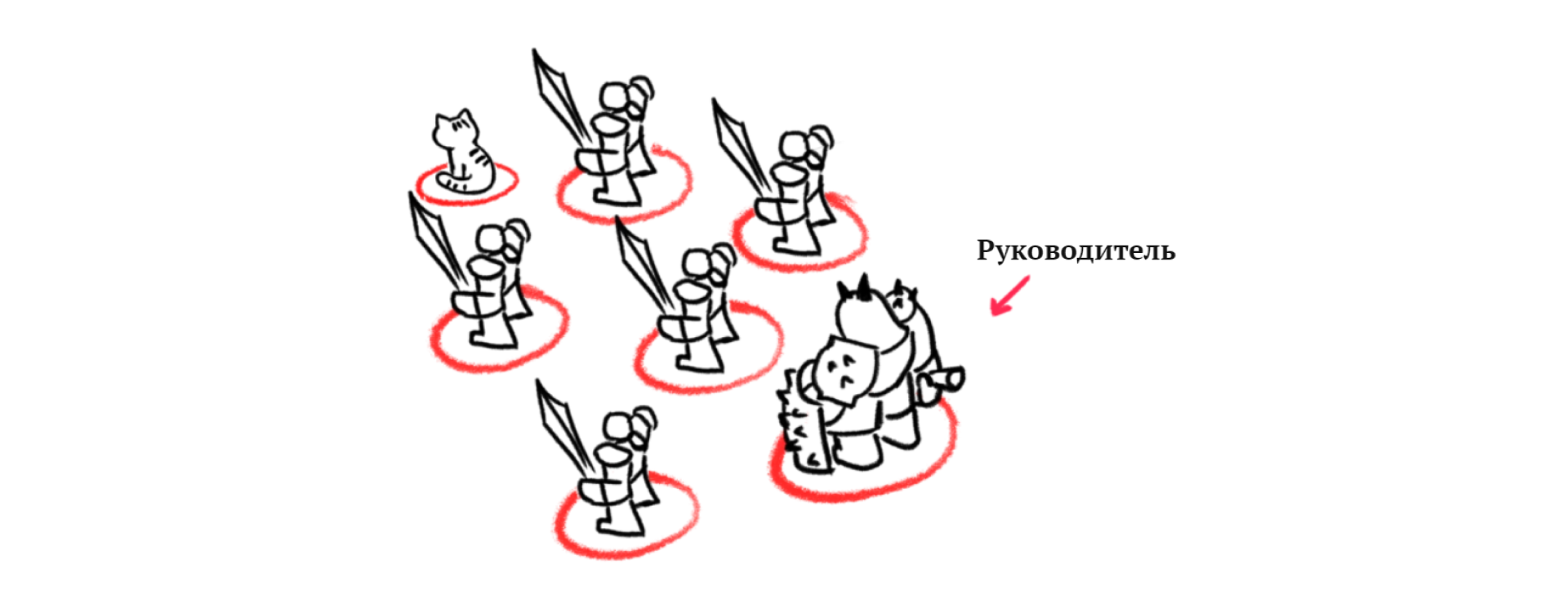
Usually the Russian manager thinks that trouble should land on the executors, so a crowd of people lies in front of the manager. If trouble has already struck, it’s the executors’ trouble. Surely it’s not the manager, of all people, who should have to answer for it. (In the IT industry it’s often not like that after all — IT is a more fun kind of thing.) And who the Healer is in business, nobody here knows. Usually business doesn’t even have a word for it — at least not in Russian.
Healer
The Healer handles an entirely concrete task in World of Warcraft. His task is to make sure the Tank doesn’t fall. He knows that one day the guy who takes all the trouble will simply run out of strength, because no matter how thick his armor is, it gets pierced, and he cries at home. Especially if the Tank is a girl. Girls are hell of good Tanks, but they’re fragile — they break.
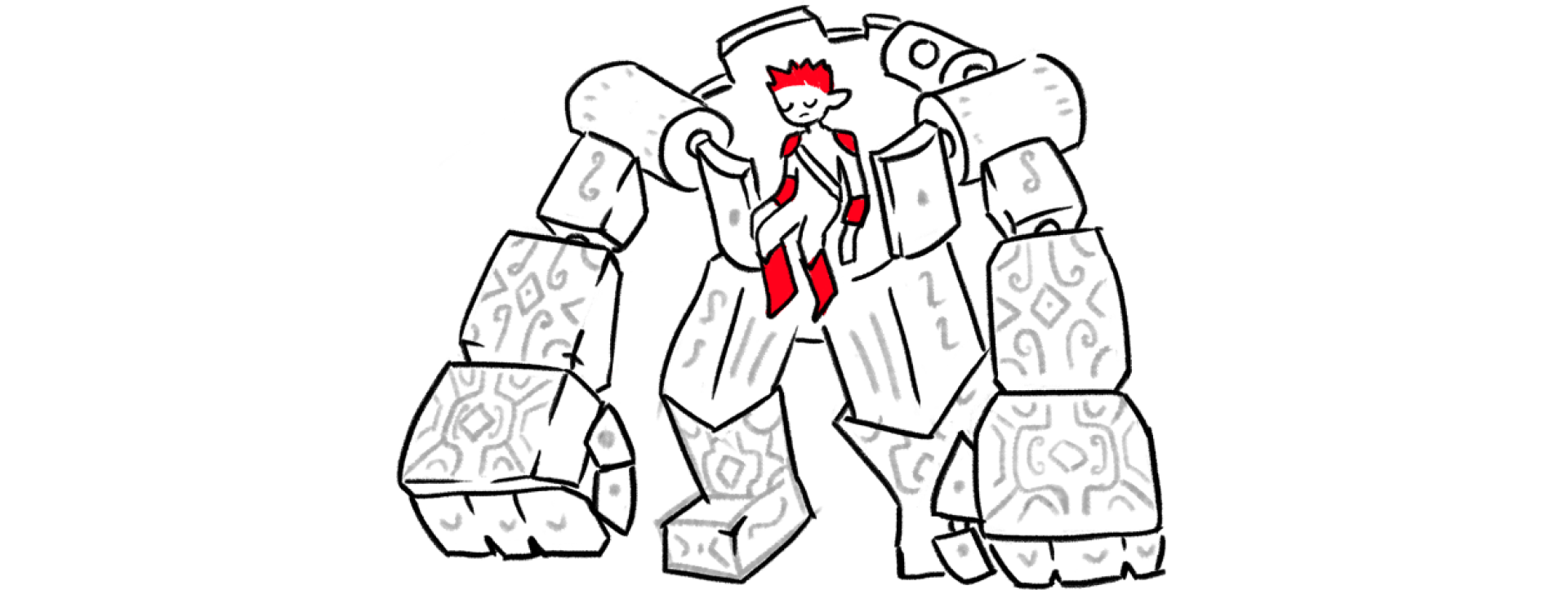
That’s why the raid needs someone who will make sure the Tank sees meaning in the work, that he has someone to come to and someone who’ll raise him from the dead. That is, in my view, an understandable position for a leader.
That’s my manner of building raids. I build the raid starting from the Healer. But very often, both in games and in life, it looks like this: three DDs are looking for a Tank and a Healer, because there are a lot of DD folks — hard skills level up fast — and Tanks also happen from time to time. But Healers are damn rare.
In my view, an effective raid configuration is this: the Healer heals several Tanks, and behind the Tanks stand groups of DDs.
How does this map onto the first story? Like this:
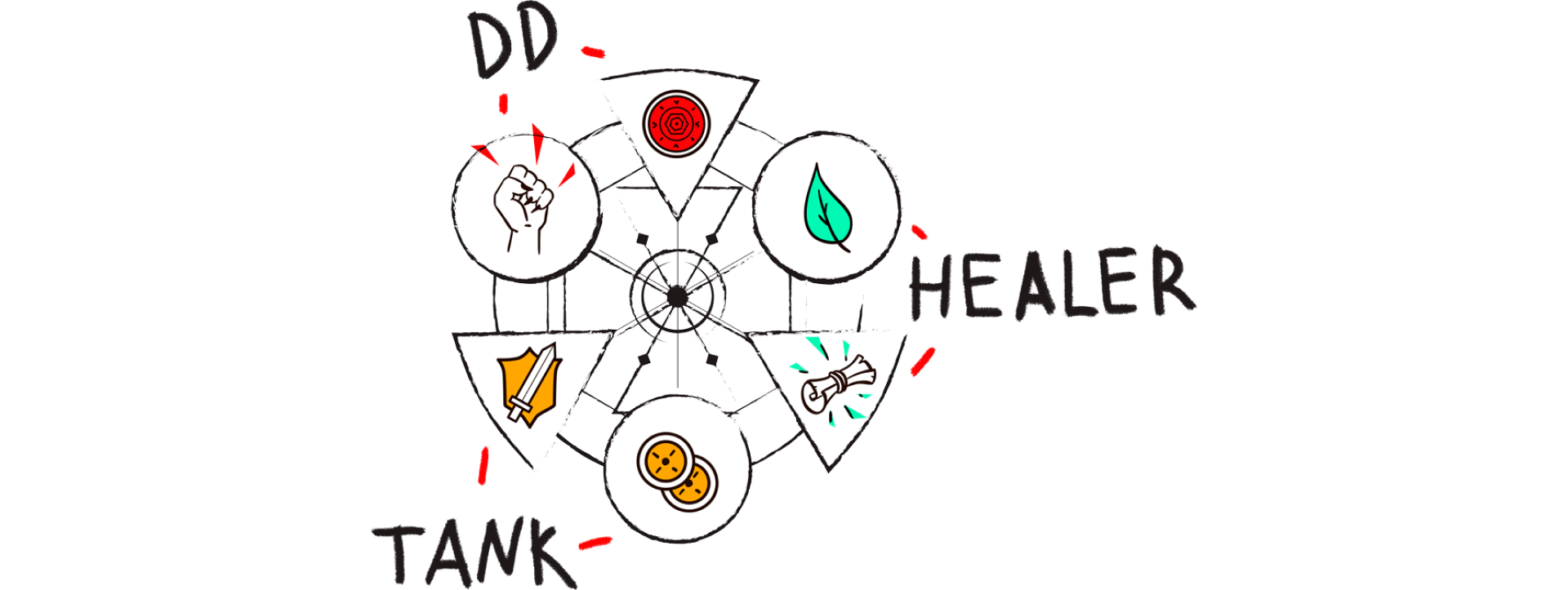
Great DDs are Troll-Mages
They’re curious. You tell them what to do — they do it. There’s a lot of engineering work here. Warrior-Dwarves also make great DDs — for example, the salespeople on the raid. In real life at JetStyle, the DDs are the makers: designers, frontend developers, backend developers, and so on.
The best Tanks are Warrior-Dwarves
They need victory. They take to the military metaphor perfectly, because they understand: their job is to protect. At JetStyle these are the project managers.
Healers are Elf-Priests
In my view, this is the role of a competent HR person. How does a proper Healer behave in a proper raid? First he heals the Tank, and then, if there’s time left, he heals the rest. Because if the Tank dies — the raid dies. To my mind, a normal way of doing business. At JetStyle the Healer role is taken up by the leadership.
Conclusion
A person evolves in the course of working in a team, and their role can change — while a leader’s role must change. If your company has grown and now has a different leading activity and a different leading ethic, you need a leader in a different position: either change your position yourself, or hire a different leader.